
"outer skin"
300 article(s) found

Why does coffee need to be processed? Introduction to the difference in the process of washing coffee beans and drying honey
Before understanding the treatment, there is a knowledge that must be popularized to non-coffee enthusiasts: what is coffee? 1 Coffee is a shrub or small tree of Rubiaceae. The first flowering time is about three years old, and the white flowers will give off a faint fragrance of jasmine and begin to bear fruit a few months later.

Introduction to the flavor and taste of the coffee producing area of Rwanda Coffee Manor the characteristics of Rwandan coffee in Kimmel Manor
The sink technician in the process will clean the coffee immediately because the delay will ferment the sugary outer layer of the coffee beans, ruining the taste of the coffee. The coffee beans are first thrown into a deep trough, and the best quality coffee fruit goes into the bottom and passes through a machine that peels off its skin. The mechanic takes out the floating coffee fruit, processes it in the same way and allows the cooperative to compare it in the domestic market.

From coffee tree to coffee
Coffee is a perennial evergreen shrub or small tree of Rubiaceae. It is a horticultural perennial cash crop with the characteristics of fast growth, high yield, high value and wide market. Wild coffee trees can grow to a height of 5 to 10 meters, but coffee trees planted on the manor are often cut to less than 2 meters in order to increase their fruit and facilitate harvesting.
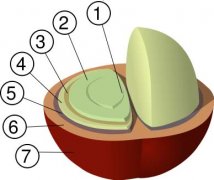
The anatomy of coffee the internal structure of coffee beans.
1. Central line 2, endosperm 3, silver skin 4, endocarp (parchment) 5, gelatinous layer 6, pulp 7, outer skin

Secret Book of Coffee Bean processing
After the fruit is harvested, the outer skin, pulp, endocarp and silver skin should be removed before shipping.

The difference between sunburned and washed coffee beans is illustrated by the process of coffee solarization.
Coffee tanning process chart-the difference between sun-cured and washed coffee beans is very common in Brazil. The natural washing method is very similar to the water washing method, except that the natural washing method uses a high-pressure washing machine to remove the mucous membrane of the coffee surface, thus skipping the fermentation process. Several coffee and raw bean processing companies in Brazil and Colombia have patented this method and become

(turn) from coffee tree to coffee
Coffee is a perennial evergreen shrub or small tree of Rubiaceae. It is a horticultural perennial cash crop with the characteristics of fast growth, high yield, high value and wide market. Wild coffee trees can grow to a height of 5 to 10 meters, but coffee trees planted on the manor are often cut to less than 2 meters in order to increase their fruit and facilitate harvesting. The first flowering period of a coffee tree is about the age of the tree.

What is the coffee silver skin? does the coffee bean silver skin affect the taste? it's just between the lines.
Professional coffee knowledge exchange more coffee bean information please pay attention to the coffee workshop (Wechat official account cafe_style) front street-coffee silver skin introduced sun beans in the roasting process, the surface of silver skin, in the water discharge at the same time peel off, the sun outside the silver skin of beans is relatively more, more thoroughly when roasting, so relatively less when grinding. Of course, it is directly related to the baking degree.

The structure name of each part of coffee bean
The structure name of each part of the coffee bean the coffee fruit is wrapped with a hard outer skin (cut skin) on the outside, a gelatinous pulp (pulp) on the inside, an endocarp (parchament) on the inside, and a silver skin tightly wrapped on the seed, and the green seed is wrapped on the inside, that is, the coffee bean. Seeds usually exist in pairs, each showing

Planting conditions of Coffee trees
The origin of the coffee tree is Ethiopia in Africa. In botany, coffee trees belong to the evergreen trees of the subgenus Rubiaceae, and coffee beans, commonly known as coffee beans, are actually the seeds of the fruit of coffee trees. They are called coffee beans only because they are shaped like beans. Climate is the decisive factor for coffee cultivation. Coffee trees are only suitable for growing in the tropics or subtropics, so latitude 25 degrees south and north.

Coffee roaster hot air probe-hot air coffee bean roaster
Coffee roaster hot air probe-hot air coffee bean roaster combines the advantages of direct fire and hot air, which is the mainstream of commercial roaster at present. Semi-direct-fire baking is actually similar to direct-fire baking, but because there are no holes in the outer wall of the baking container, the flame will not directly touch the coffee beans; in addition, ventilation equipment will be added to the baking capacity.

Theoretical study, from coffee tree to coffee
Coffee is a perennial evergreen shrub or small tree of Rubiaceae. It is a horticultural perennial cash crop with the characteristics of fast growth, high yield, high value and wide market. Wild coffee trees can grow to a height of 5 to 10 meters, but coffee trees planted on the manor are often cut to less than 2 meters in order to increase their fruit and facilitate harvesting. The first flowering period of a coffee tree is about the age of the tree.

How to avoid bitterness when cooking? Will silver skin have a bitter taste?
Professional coffee knowledge exchange more coffee bean information please follow the coffee workshop (Wechat official account cafe_style) light to medium roasted coffee beans are relatively low in bitterness and retain our favorite coffee aroma and flavor. Of course, bitterness is a relatively subjective sense, and there are still a large number of customers who like bitter taste. Is it possible to avoid coffee by roasting coffee beans light to moderate?

The roasting process of coffee tree fruit from coffee tree to coffee
Coffee is a perennial evergreen shrub or small tree of Rubiaceae. It is a horticultural perennial cash crop with the characteristics of fast growth, high yield, high value and wide market. Wild coffee trees can grow to a height of 5 to 10 meters, but coffee trees planted on the manor are often cut to less than 2 meters in order to increase their fruit and facilitate harvesting. The first flowering period of a coffee tree is about the age of the tree.

An introduction to the aroma, acidity and mellowness of coffee from Lutesilo in the western province of Rwanda
The sink technician in the process will clean the coffee immediately because the delay will ferment the sugary outer layer of the coffee beans, ruining the taste of the coffee. The coffee beans are first thrown into a deep trough, and the best quality coffee fruit goes into the bottom and passes through a machine that peels off its skin. The mechanic takes out the floating coffee fruit, processes it in the same way and allows the cooperative to compare it in the domestic market.

What is the structure of coffee cherries from inside to outside? hero Cherry seed American Coffee Machine
What is the structure of coffee cherries from the inside to the outside? hero cherry seeds American coffee machine coffee fruit is wrapped in a hard outer skin (cut skin), the inside is a gelatinous pulp (pulp), and the inside is an endocarp (parchament), and the inside is tightly wrapped in the seed called silver skin, and the inside is wrapped in green seeds, namely coffee beans.

Are parchment coffee beans wrapped in exocarp?
Parchment coffee beans refer to the beans wrapped in the exocarp? how to distinguish between washed coffee beans and sun-washed beans? the water content of coffee washed beans is higher, while the water content of sun-dried beans is relatively low. General coffee beans show different colors due to their different water content, with higher water content being green or cyan, and less brown or near white. So water-washed coffee
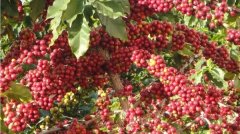
An introduction to the common sense of coffee trees
The origin of the coffee tree is Ethiopia in Africa.

The planting temperature of coffee tree is between 15 degrees and 25 degrees.
The origin of the coffee tree is Ethiopia in Africa. In botany, coffee trees belong to the evergreen trees of the subgenus Rubiaceae, and coffee beans, commonly known as coffee beans, are actually the seeds of the fruit of coffee trees. They are called coffee beans only because they are shaped like beans. Climate is the decisive factor for coffee cultivation. Coffee trees are only suitable for growing in the tropics or subtropics, so latitude 25 degrees south and north.

Production conditions of Coffee trees Muskcat Arabica
1. Planting conditions of coffee trees the ideal planting conditions of coffee trees are as follows: the temperature climate is between 15-25 ℃, and the annual rainfall must reach 1500-2000 mm, and the rainfall time should be in line with the flowering cycle of coffee trees. Of course, in addition to the seasonal rainfall, there should also be fertile soil and good drainage. Fertile soil containing volcanic ash